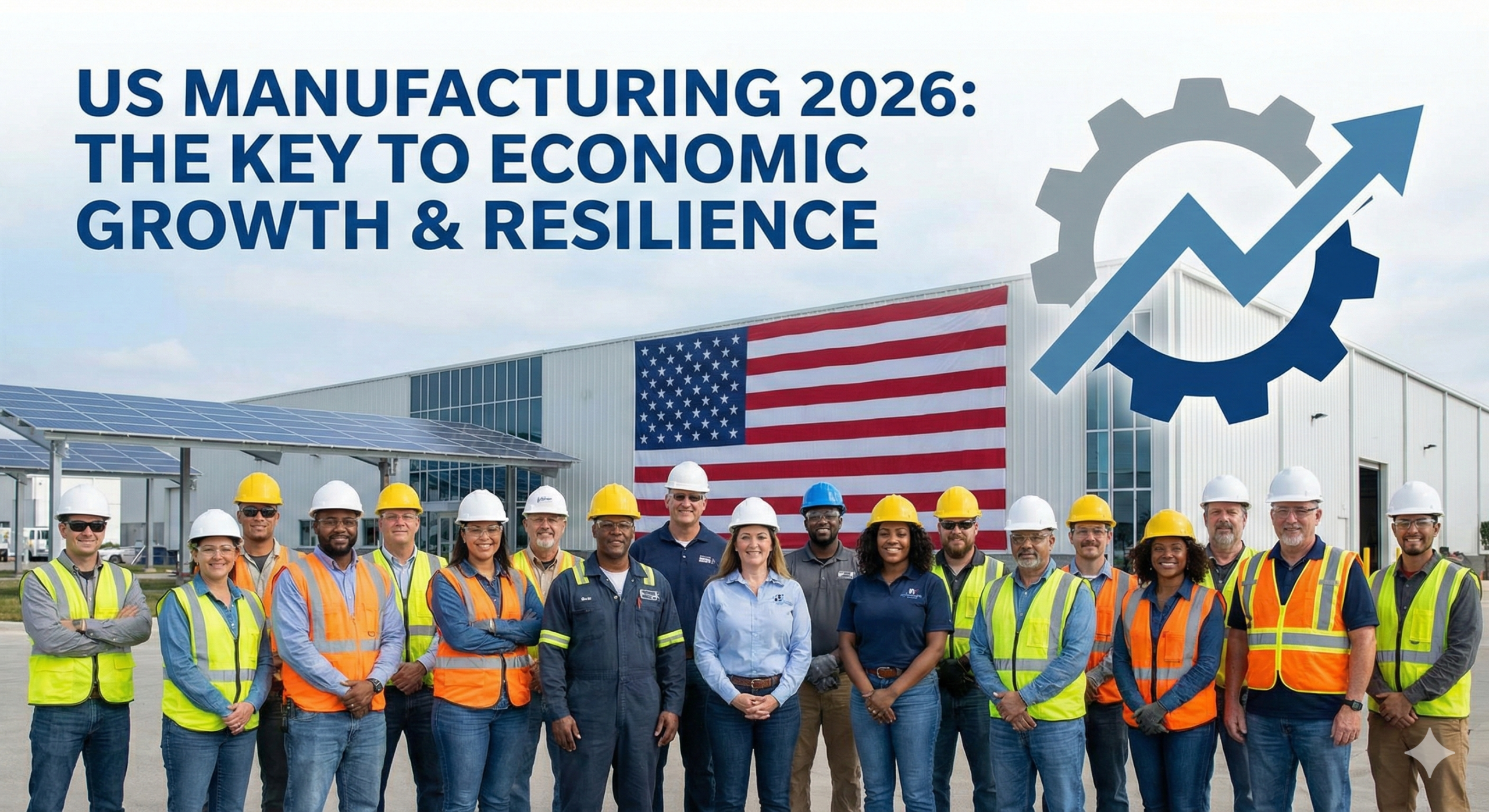

Did you know that every dollar spent on United States manufacturing adds $2.74 to our overall economy?
In 2022, manufacturing in the United States represented 11.4% of the total US GDP, amounting to an impressive $2.3 trillion. However, this is just the beginning of what could be a true manufacturing renaissance. As global supply chains become increasingly unreliable, we’re witnessing a significant shift toward domestic production. In fact, nearly two-thirds of U.S. consumers actively seek American-made goods, and the US manufacturing industry shows promising signs of growth. The U.S. textile market alone reached $188.3 billion in 2024 and is projected to grow at a 4.1% CAGR, hitting $277.4 billion by 2033.
Why is this manufacturing growth so critical for our economic future? Throughout this article, we’ll explore how the United States is positioned to become the second-largest manufacturing nation behind China, and why this shift represents our best opportunity for sustainable economic prosperity. From reducing supply chain vulnerabilities to creating skilled jobs and driving innovation, we’ll uncover the compelling reasons why United States manufacturing holds the key to our economic success in 2026 and beyond.
Table of Contents
Key Takeaways
The shift toward United States manufacturing represents a critical opportunity for economic growth, offering businesses better control, lower total costs, and stronger customer relationships while building America’s economic resilience.
• Global supply chains are failing businesses with shipping delays 12x normal levels, rising costs, and geopolitical risks affecting 82% of supply chain leaders.
• US manufacturing delivers superior economics with 20-30% of imported products actually costing less domestically when total ownership costs are calculated.
• Local production accelerates market success by reducing time-to-market from 24 months to 10 weeks while enabling mass customization for 50%+ of customers seeking personalized products.
• American-made products command premium pricing as 87% of consumers value domestic manufacturing and 83% willingly pay up to 20% more for US-made goods.
• Manufacturing drives exponential economic growth with each dollar spent adding $2.74 to the economy and every manufacturing job creating 1.6 additional local jobs.
The manufacturing renaissance isn’t just about bringing jobs back—it’s about building a more resilient, innovative, and prosperous economic future that benefits businesses, communities, and consumers alike.
Why global supply chains are no longer reliable
Have you noticed your online orders taking longer to arrive or costing more than they used to? The once-reliable global supply chains that businesses depended on are now breaking down at an alarming rate.
Shipping delays and rising costs
The global supply chain pressure index shows unprecedented disruptions since the start of the COVID-19 pandemic [1]. What used to be occasional delays have become persistent nightmares for manufacturers and consumers alike. During peak pandemic disruptions, shipping delays reached nearly 12 times the long-run average [2].
Additionally, in 2024, various factors continued to disrupt shipping, including low water levels in the Panama Canal and Houthi rebel attacks in the Red Sea that forced ships to divert around Africa, extending shipment times by up to two weeks [2]. These disruptions weren’t isolated incidents but part of a disturbing pattern.
Consequently, costs have skyrocketed. By early 2025, inflation had exceeded pre-pandemic averages in two-thirds of countries worldwide, with more than 20 developing economies experiencing double-digit inflation [3]. For small island states, freight costs raise inflation five times faster than the global average [4].
Geopolitical risks and trade barriers
The geopolitical landscape has become increasingly hostile to global trade. A McKinsey survey found that 82% of global supply chain leaders reported their supply chains were affected by new tariffs in 2025, with 20-40% of their supply chain activity impacted [5].
Trade policies continue to shift unpredictably, creating what one expert called “the highest tariff of all: uncertainty” [4]. This unpredictability forces companies to continually reconfigure their operations, resulting in:
- Reduced global export orders [2]
- Shifting supply routes and source locations [5]
- Increased costs for components and raw materials [5]
- Decreased customer demand [5]
Furthermore, geopolitical risks significantly suppress trade openness, with particularly pronounced negative effects in countries with lower government integrity and weaker monetary freedom [6].
Quality control and IP concerns
Quality issues represent another critical vulnerability in global supply chains. Research comparing drug manufacturing plants in the U.S. mainland versus Puerto Rico found that offshore plants operate with significantly higher quality risks than matching plants operated by the same firm located in the mainland [7].
Meanwhile, intellectual property theft remains a persistent threat. Throughout the global supply chain, IP could be misappropriated at multiple points through counterfeiting, theft of trade secrets, or unauthorized use of patents [8]. This risk is especially pronounced in certain manufacturing regions operating on different IP protection standards.
For United States manufacturing, these global challenges present a unique opportunity for growth—a topic we’ll explore more deeply in the upcoming sections.

The economic case for manufacturing in the United States
Do you know how much hidden costs eat into your manufacturing budget when producing overseas?
Lower total cost of ownership
When businesses focus solely on upfront costs, they miss the bigger financial picture. Total Cost of Ownership (TCO) captures all expenses across an asset’s lifetime—from acquisition to disposal [9]. While foreign manufacturing may initially seem cheaper, a comprehensive TCO analysis reveals that 20-30% of imported products would actually cost less if made in America [10].
Manufacturing equipment managers use TCO to make smarter investments by examining the full ownership picture—initial costs, setup, operations, maintenance, training, support, and depreciation [11]. This approach helps manufacturers maximize their return on investment rather than falling into the trap of deceptive initial pricing.
Faster time-to-market and customization
Time-to-market represents a crucial competitive edge. American manufacturers can deliver products in as little as 10 weeks—compared to 12-24 months with traditional offshore approaches [12]. This acceleration isn’t just convenient—it’s financially transformative. Each day your product sits in development, you’re spending without earning [12].
Moreover, over 50% of customers now seek personalized products [13]. United States manufacturing excellence shines through mass customization—creating tailored products without significantly increasing costs or delivery times [13]. This capability builds customer loyalty while commanding higher prices.
Improved cash flow and inventory efficiency
Manufacturing businesses face unique cash flow challenges with large amounts tied up in unsold inventory, wages, credit lines, and production [14]. Domestic manufacturing solves this by optimizing inventory levels—having enough stock to meet customer demand without excessive storage costs [1].
Strong cash flow enables manufacturers to invest in growth opportunities like extending product lines and purchasing advanced technology [14]. It also creates reserves for unexpected events, ensuring uninterrupted operations during financial downturns [14].
Higher quality and productivity
Despite recent measurements showing slowed productivity growth, deeper analysis reveals this is largely a measurement issue [5]. When properly accounting for quality improvements in manufacturing, TFP (Total Factor Productivity) growth is actually much greater—1.4% annually versus 0.6% in official data [15].
Ready to strengthen both your business and the American economy? Making the switch to American-made products creates resilient supply chains, supports quality jobs, and drives innovation—all while potentially reducing your true costs [16].
Strategic advantages of local production
Are you aware that nearly 70% of Americans prefer products made in the USA [17]?
Better supply chain visibility and control
In a world of complex manufacturing networks, visibility into your supply chain is essential. Local production offers unprecedented transparency—you can track orders at any point, identify inefficiencies, and respond to disruptions immediately [18]. This visibility empowers manufacturers to make data-driven decisions that optimize operations and improve product quality [18].
Enhanced regulatory compliance
For American manufacturers, regulatory oversight is demanding—costing small firms over $50,000 per employee [19]. Nonetheless, local production simplifies compliance through closer management of testing procedures and enforcement of safety standards [20].
Environmental benefits of reduced emissions
Shorter supply chains mean substantially smaller carbon footprints. By eliminating long-distance shipping, domestic production directly cuts transportation emissions [2]. Local manufacturing reduces energy consumption and supports stronger environmental standards [21].
Stronger customer trust and brand value
Perhaps most compelling, an impressive 87% of consumers believe purchasing domestically manufactured products is important [22]. Even more remarkable—83% of Americans are willing to pay up to 20% more for products made in the USA [17].
Ready to strengthen your business while supporting America’s manufacturing renaissance? Making the switch to United States manufacturing doesn’t just yield operational benefits—it builds deeper connections with customers who increasingly value transparency, sustainability, and local impact.
How US manufacturing supports long-term growth
What if I told you the manufacturing sector could create up to 1.5 million new American jobs in the coming years?
Creating resilient regional economies
United States manufacturing serves as the primary economic engine in approximately 500 counties across America today [23]. These manufacturing hubs provide employment opportunities that pay twice as much as equivalent service-sector positions [23]. Furthermore, manufacturing creates a powerful multiplier effect—each manufacturing job generates an additional 1.6 jobs in the local community through increased spending [24].
Driving innovation and technical leadership
Manufacturing remains the main driver of innovation in America, responsible for an impressive 55% of all patents [25]. The sector performed $326 billion—or 54%—of all domestic research and development in 2021 [25]. This innovation strength helps maintain America’s global technological competitiveness.
Building a skilled and future-ready workforce
Although manufacturers face significant workforce challenges—with potentially 2.1 million unfilled jobs by 2030 [26]—this presents an opportunity for growth. Through programs like Manufacturing USA, over 100,000 workers, students, and educators participated in institute workforce programs last year [27], creating pathways to high-paying careers.
Aligning with national security and sustainability goals
Beyond economic benefits, United States manufacturing is essential for national security. As the Department of Defense notes, maintaining domestic manufacturing capability ensures America can meet warfighter needs throughout defense systems’ lifecycles [28]. Simultaneously, manufacturers embracing sustainability report substantial benefits, including lower resource costs, improved brand recognition, and easier employee retention [29].
Conclusion
Are you ready to be part of America’s manufacturing renaissance?
After all, we’ve seen how the old way of relying on global supply chains brings nothing but headaches – shipping delays, quality concerns, and unpredictable costs. This broken system hurts businesses and consumers alike. Meanwhile, United States manufacturing offers a clear path forward with faster delivery times, better quality control, and often lower total costs when everything is counted.
The numbers speak for themselves. American manufacturing adds $2.74 to our economy for every dollar spent. Most customers prefer products made here and will gladly pay more for them. This preference creates a win-win situation where businesses thrive while creating good-paying jobs.
What happens when we bring production back home? We gain control over our supply chains, meet regulations more easily, reduce environmental impact, and build stronger customer relationships. Many businesses discover that switching to American-made products actually saves money while strengthening their brand.
Beyond individual companies, domestic manufacturing forms the backbone of regional economies, drives innovation, and creates pathways to well-paying careers. This shift also ensures America maintains its technological edge while meeting important national security needs.
Therefore, the choice becomes clear. Making the switch to American-made products not only benefits your business but also strengthens our collective economic future. Each purchase decision ripples through communities, creating jobs and fostering innovation.
The manufacturing comeback has already begun. Will you join it?
Q1. How does manufacturing contribute to the US economy?
US Manufacturing plays a crucial role in the economy by creating jobs, supporting local economies, and strengthening national security. It adds $2.74 to the overall economy for every dollar spent, drives innovation, and helps maintain America’s global technological competitiveness.
Q2. What are the advantages of manufacturing in the United States?
Manufacturing in the US offers several advantages, including lower total cost of ownership, faster time-to-market, improved cash flow, higher quality products, better supply chain visibility, enhanced regulatory compliance, and reduced environmental impact. It also builds stronger customer trust and brand value.
Q3. How does US Manufacturing address global supply chain issues?
US manufacturing helps mitigate global supply chain disruptions by reducing dependence on unreliable international networks. It offers faster delivery times, better quality control, and often lower total costs when all factors are considered, providing a more stable and efficient alternative to global supply chains.
Q4. What challenges does the US Manufacturing industry face in 2026?
The US Manufacturing industry in 2026 is expected to face challenges such as an aging workforce, a shortage of skilled workers, competition for digital talent with other industries, and difficulties in retaining employees. However, these challenges also present opportunities for growth and innovation in workforce development.
Q5. How does consumer preference impact US Manufacturing?
Consumer preference significantly impacts US manufacturing, with nearly 70% of Americans preferring products made in the USA. In fact, 83% of consumers are willing to pay up to 20% more for American-made goods. This preference drives demand for domestic manufacturing and supports its growth and sustainability.
References
[1] – https://www.ecisolutions.com/blog/manufacturing/jobboss2/optimizing-inventory-control-in-manufacturing-best-practices-and-tools/
[2] – https://chopvalue.com/blogs/newsroom/local-manufacturing-is-the-future?srsltid=AfmBOoqz6r-ZMWIfy57LQ8iK0y2MglajIxKYwfaA9JzcxGf0Mt9tpcEF
[3] – https://news.un.org/en/story/2025/05/1163301
[4] – https://unctad.org/news/global-supply-chains-under-strain-ministers-call-just-and-resilient-transitions
[5] – https://bfi.uchicago.edu/insights/why-is-manufacturing-productivity-growth-so-low/
[6] – https://www.sciencedirect.com/science/article/pii/S1059056025005295
[7] – https://papers.ssrn.com/sol3/papers.cfm?abstract_id=4847779
[8] – https://www.lawyersofdistinction.com/the-impact-of-globalization-on-intellectual-property-law/
[9] – https://galorath.com/blog/total-cost-of-ownership/
[10] – https://www.tapecon.com/blog/the-math-of-manufacturing-how-total-cost-of-ownership-impacts-reshoring-decisions
[11] – https://gesrepair.com/total-cost-of-ownership-why-it-matters-in-manufacturing/
[12] – https://dem-mfg.com/resources/accelerate-time-to-market-manufacturing
[13] – https://www.gray.com/insights/customization-is-one-of-the-hottest-trends-in-manufacturing/
[14] – https://www.highradius.com/resources/Blog/cash-flow-in-manufacturing-business/
[15] – https://cepr.org/voxeu/columns/hidden-growth-us-manufacturing-productivity
[16] – https://www.cato.org/blog/manufacturing-employment-data-confirms-concentrated-benefits-dispersed-costs-trumps-tariffs
[17] – https://www.scmr.com/article/americans_say_they_prefer_products_made_in_usa_and_will_pay_more_for_them
[18] – https://www.supplychaindive.com/spons/why-better-supply-chain-visibility-is-critical-in-2025/735993/
[19] – https://www.huschblackwell.com/newsandinsights/legal-insights-for-manufacturing-regulatory-compliance
[20] – https://www.allthingssupplychain.com/localizing-production-exploring-reshoring-trends-in-supply-chains/
[21] – https://www.robeco.com/en-int/insights/2024/10/the-rise-of-local-brands
[22] – https://www.carbonmedia.com/survey-shows-american-consumers-prefer-american-made-products/
[23] – https://www.mckinsey.com/capabilities/operations/our-insights/delivering-the-us-manufacturing-renaissance
[24] – https://www.npr.org/sections/planet-money/2025/06/03/g-s1-70167/can-bringing-back-manufacturing-help-the-heartland-catch-up-with-superstar-cities
[25] – https://www.nist.gov/blogs/manufacturing-innovation-blog/manufacturing-america-contributing-our-economy-employment-and
[26] – https://themanufacturinginstitute.org/2-1-million-manufacturing-jobs-could-go-unfilled-by-2030-11330/
[27] – https://www.manufacturingusa.com/key-initiatives/manufacturing-workforce-development
[28] – https://www.dodmantech.mil/
[29] – https://www.epa.gov/sustainability/sustainable-manufacturing